


Is Babywearing Bad for My Baby? 5 Babywearing Myths, Busted

Whether you’re rocking your first baby or you’re a pro at this whole babywearing gig, chances are you’ve heard some wild babywearing myths which may even have you questioning, "Is babywearing bad for my baby?" 🙈 Enter the hope&plum mythbusters, ready to bust those rumors wide open! Let’s clear the air so you can feel safe, confident, and totally in the know on your babywearing journey.
THE SHORT VERSION
- Is babywearing bad for your baby? No! Some popular myths suggest this, but we're here to give you the facts.
- Babywearing doesn’t spoil babies: It fulfills their need for closeness and strengthens emotional bonds.
- Babywearing is safe: Proper carriers and guidelines like T.I.C.K.S. ensure safety; fit consultations can address user errors.
- Babywearing is for everyone: Dads, grandparents, and caregivers can all babywear with size-inclusive carriers.
- Babywearing supports healthy hips: The "M" position in carriers supports proper hip development.
- Babywearing can be comfortable: Ergonomic carriers and proper fit checks help distribute weight evenly for caregivers.
Myth #1: Will Babywearing Spoil My Baby?
THE TRUTH: Babies worn in carriers aren't "spoiled". Holding and wearing your baby fulfills their natural need for closeness, comfort, and security. Studies show that babies who are held more tend to develop better social-emotional bonds with caregivers. “Our data suggest that babywearing among U.S. mothers may play a role in maternal responsiveness, an important component of the infant’s early social environment” (Little et al., 2019). Babywearing doesn’t spoil babies; it helps them feel safe and loved.
My baby loves to be carried in the Lark...this carrier has helped create, strengthen and grow our bond together.

Myth #2: Is Babywearing Bad or Unsafe?
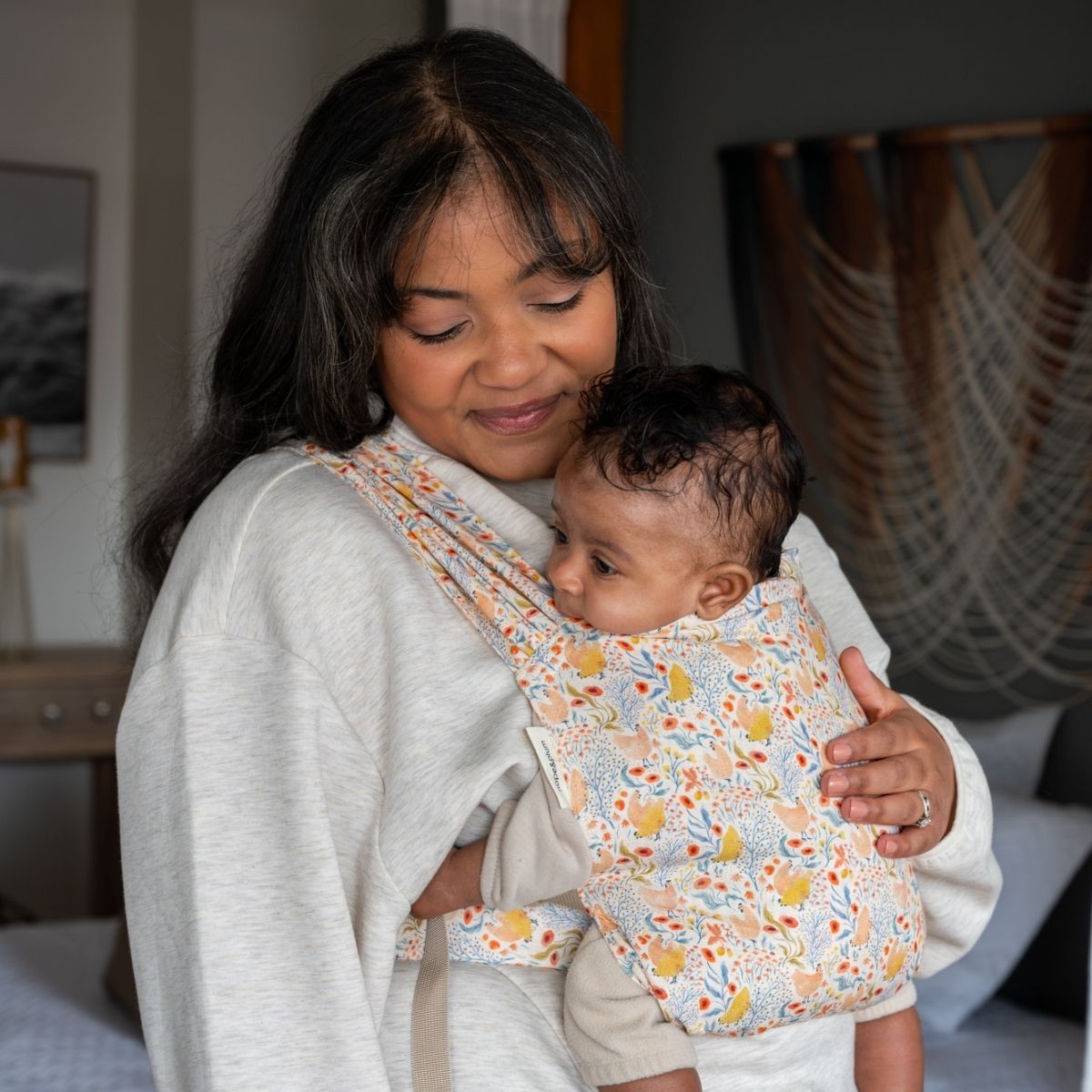
THE TRUTH: When done correctly with a proper carrier, babywearing is safe, and using a baby carrier actually has many benefits! Follow the "T.I.C.K.S." guidelines to ensure safety:
T.I.C.K.S. Rules for Safe Babywearing
Tap a letter to learn what it means and why it matters for your baby.
T: Tight
Your carrier should be snug enough to hug baby close to your body. A loose carrier lets baby slump down, which can block their airway.
Why it matters: A snug fit keeps baby's chin off their chest and their airway open. If you can fit a flat hand between you and baby, it's too loose.

I: In View at All Times
You should always be able to see baby's face by glancing down. Fabric should never cover their nose or mouth.
Why it matters: Pull the top hem to the nape of a newborn's neck, never over their head. You need a clear view to spot any positioning issue right away.

C: Close Enough to Kiss
Baby's head should be high enough on your chest that you can tip your chin down and kiss the top of their head.
Why it matters: If baby is too low, their chin can drop to their chest and restrict their airway. Higher is always safer.

K: Keep Chin Off the Chest
There should always be at least two fingers' width of space between baby's chin and their chest.
Why it matters: A chin-to-chest position can compress the airway. Check this every few minutes, especially when baby falls asleep.

S: Supported Back
Baby's back should be supported in its natural position, with their tummy and chest against you. Knees should sit higher than their bottom in a spread-squat (M-shape) position.
Why it matters: Proper back support keeps baby's spine in a healthy C-curve (or J-curve for older babies) and supports their developing hips.
Many babywearing mishaps stem from simple user error, and sadly, unsafe practices are often promoted in ads and videos from other companies. At hope&plum, we take safety seriously. Our commitment to safe babywearing means our promotional content always features proper techniques, and we actively call in companies to raise awareness when unsafe practices appear in media.
I love that hope and plum offered a free virtual fit check, which made me feel confident that baby was safe in the carrier.
To support your journey, we offer free fit consultations for all hope&plum carriers—whether new or pre-loved, whether it’s your first fit check or your fifth. Our team of expert educators is here to help you wear with confidence, comfort, and, most importantly, safety. 💕
Myth #3: Is Babywearing Only for Moms?
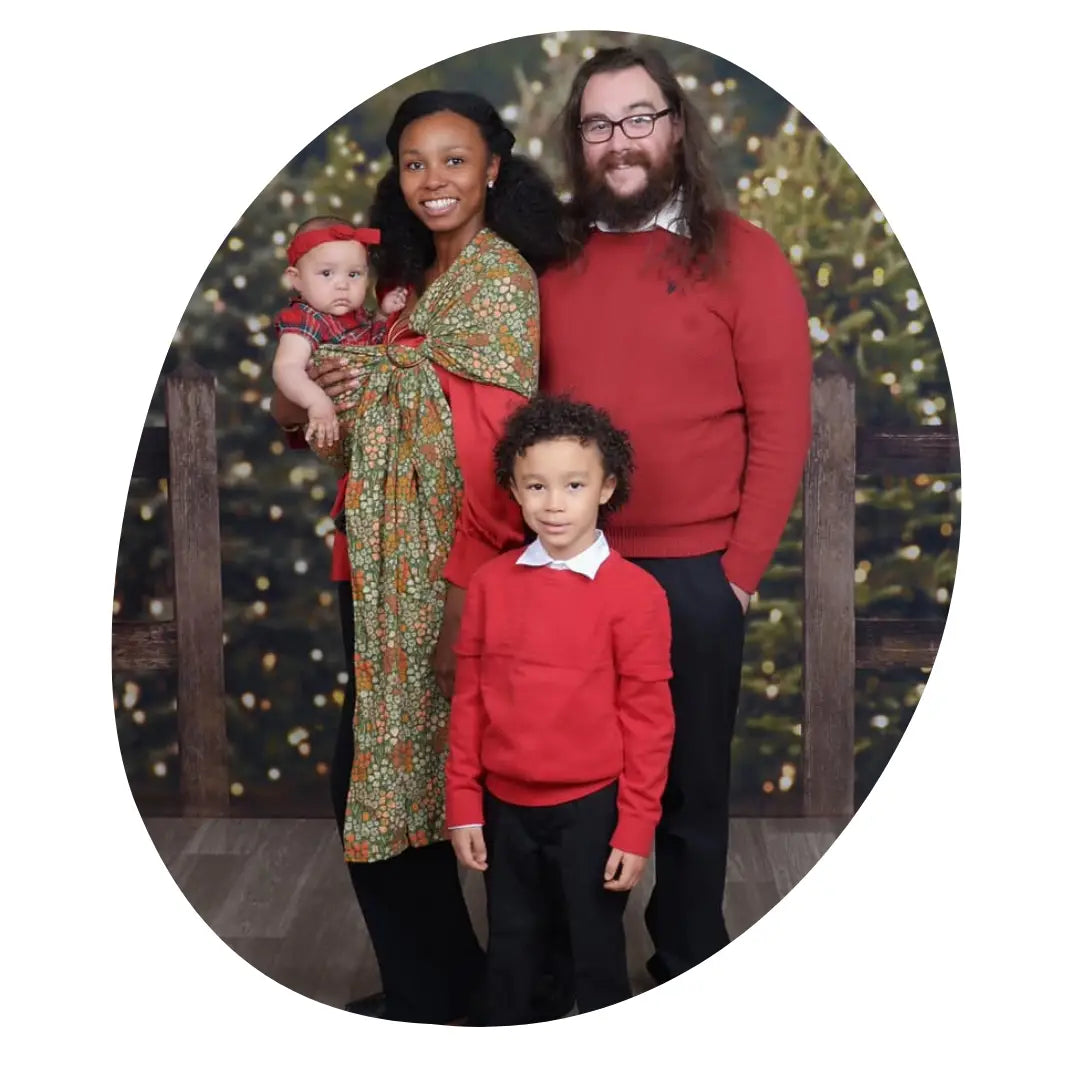
THE TRUTH: Babywearing is for everyone—dads, grandparents, aunties, uncles, and every caregiver in between! At hope&plum, we design carriers with inclusivity in mind, ensuring they’re accessible for a wide range of body types. Our carriers are designed for straight-size and plus-size bodies alike. They fit sizes XXS–6X, no extenders needed, so everyone can find their perfect fit. Because when we say babywearing is for everyBODY, we mean it. 💕✨
I purchased this carrier for my grandson. What a relief on my back. It fits secure and comfortable.

Myth #4: Can Babywearing Harm My Baby's Hips?
THE TRUTH: According to the International Hip Dysplasia Institute (2025), the available evidence shows that baby carriers cannot cause or prevent hip dysplasia. However, using an ergonomic baby carrier that supports your baby’s hips in the "M" position (where their knees are higher than their bottom) can add to healthy hip development. This position is especially crucial for babies at risk of hip dysplasia or developmental dysplasia of the hip (DDH).
As noted by Vaidya et al. (2021), “From an orthopedic viewpoint, baby-wearing is supposed to decrease the incidence of DDH. This is because, in baby-wearing, the infant’s lower limbs are in the ‘M’ position... For prevention of DDH, this is the safest position and mimics the position of the hips during treatment.”
I love how wide it is to get a deep seat, supportive enough for my baby.
At hope&plum, all of our carriers are thoughtfully designed to help your baby naturally achieve an "M" shape, providing support for their growing hips. Because your little one’s health and comfort are always our top priorities! 💕
The M-Shape: Supporting Baby's Legs
Your carrier should support your child's legs in a spread squat position with their knees higher than their bottom.- Carrier reaches knee pit to knee pit (close to it, never past)
- Knees sit higher than bottom in a spread squat
- Legs form an M-shape, not straight or dangling

Wraps & Ring Slings
Knees ride high above bottom. The fabric molds around baby, creating a deep, supportive squat.
Larks, Sprouts & Meh Dais
Knees sit just above bottom. The panel provides structured support without exaggerated angle.Myth #5: Is Babywearing Uncomfortable?
THE TRUTH: A well-fitted, ergonomic baby carrier can make all the difference, evenly distributing your baby’s weight and keeping you comfortable for extended wear. However, much like safety risks, wearer discomfort often boils down to user error. While not all carriers truly prioritize caregiver comfort, even the best-designed carriers can feel uncomfortable if not worn correctly.
Before this carrier I thought babywearing was not for me, due to back pain and overheating. But I was so wrong!
At hope&plum, we put comfort at the heart of our designs. We carefully select soft yet strong fabrics and create carriers specifically engineered to distribute weight evenly across your back in a front carry. With hope&plum, you can enjoy a babywearing experience that’s as comfortable as it is safe. 💕

References
International Hip Dysplasia Institute. (2025, May 16). Baby carriers & related products. International Hip Dysplasia Institute. https://hipdysplasia.org/infant-child/baby-carriers-related-products/
Little, E. E., Legare, C. H., & Carver, L. J. (2019). Culture, carrying, and communication: Beliefs and behavior associated with babywearing. Infant Behavior and Development, 57, 101320. https://doi.org/10.1016/j.infbeh.2019.04.002
Vaidya, S., Aroojis, A., & Mehta, R. (2021). Developmental dysplasia of hip and post-natal positioning: Role of swaddling and baby-wearing. Indian Journal of Orthopaedics, 55(6). https://doi.org/10.1007/s43465-021-00513-3
Meet the Author

Jenn Tolisano
Jenn Tolisano is hope&plum's Director of Community Education & Content. She has been a babywearing educator for over ten years. Working as a high school teacher before entering the world of motherhood, she has brought her passion for education to all things baby carriers. Babywearing has been such an essential parenting tool in her household that she wants to spread the babywearing love to all families. Jenn believes that every caregiver deserves to have a baby carrier they love and feel comfortable and confident in. She hopes that her fit checks and blog-writing with hope&plum help to achieve that goal!

Leave a comment
This site is protected by hCaptcha and the hCaptcha Privacy Policy and Terms of Service apply.