
Safe and Snuggly Babywearing: hope&plum's Newborn Baby Carrier Tips
Babywearing is an incredible parenting tool that allows caregivers to hold their newborns close while being hands-free. Newborns have specific safety and developmental needs that a thoughtfully designed carrier will honor and support. Before beginning the babywearing journey, all new caregivers should learn about newborn babywearing safety and comfort recommendations. hope&plum is here to guide you through babywearing in the newborn stage!
TL;DR:
- Babywearing keeps newborns close while allowing caregivers to be hands-free.
- Follow T.I.C.K.S. for safe and proper newborn positioning.
- The Sprout is our newest carrier designed specifically for newborns. It's quick, easy, safe, and snuggly.
- Our baby wraps are stretchy and lightweight. They're perfect for newborns with easy in-and-out use.
- Our ring slings are adjustable and snuggly. They're great for newborns and grow with them.
- Our meh dais offer two-shoulder support, are easy to use, and adapt as baby grows.
- The Lark is best for older babies who are over 10 lbs and fitting 3-6 month clothing.

Newborn Need-to-Knows
Safety is #1 for newborns. Babywearing safety should be at the top of your list whenever you put on a carrier, but wearers have to be extra vigilant when wearing fresh babies since newborns lack the head, neck, and trunk control to keep themselves safe. A good acronym to keep in mind is T.I.C.K.S.

These safety guidelines apply to all children but are especially important for newborns. 👇
T - Tight - Your carrier should be snug to you and your newborn. You and your baby should be comfortable, but there should be no loose or bunched fabric. Baby should be snug to your body with little to no space between you, especially when the baby is resting.
I - In View - You should be able to see your baby at all times. This is integral for newborn wearing since you want to visually monitor their positioning and airway. You can also monitor your baby’s legs and feet for signs of decreased circulation. The Baby’s head and face should always be visible above the fabric.
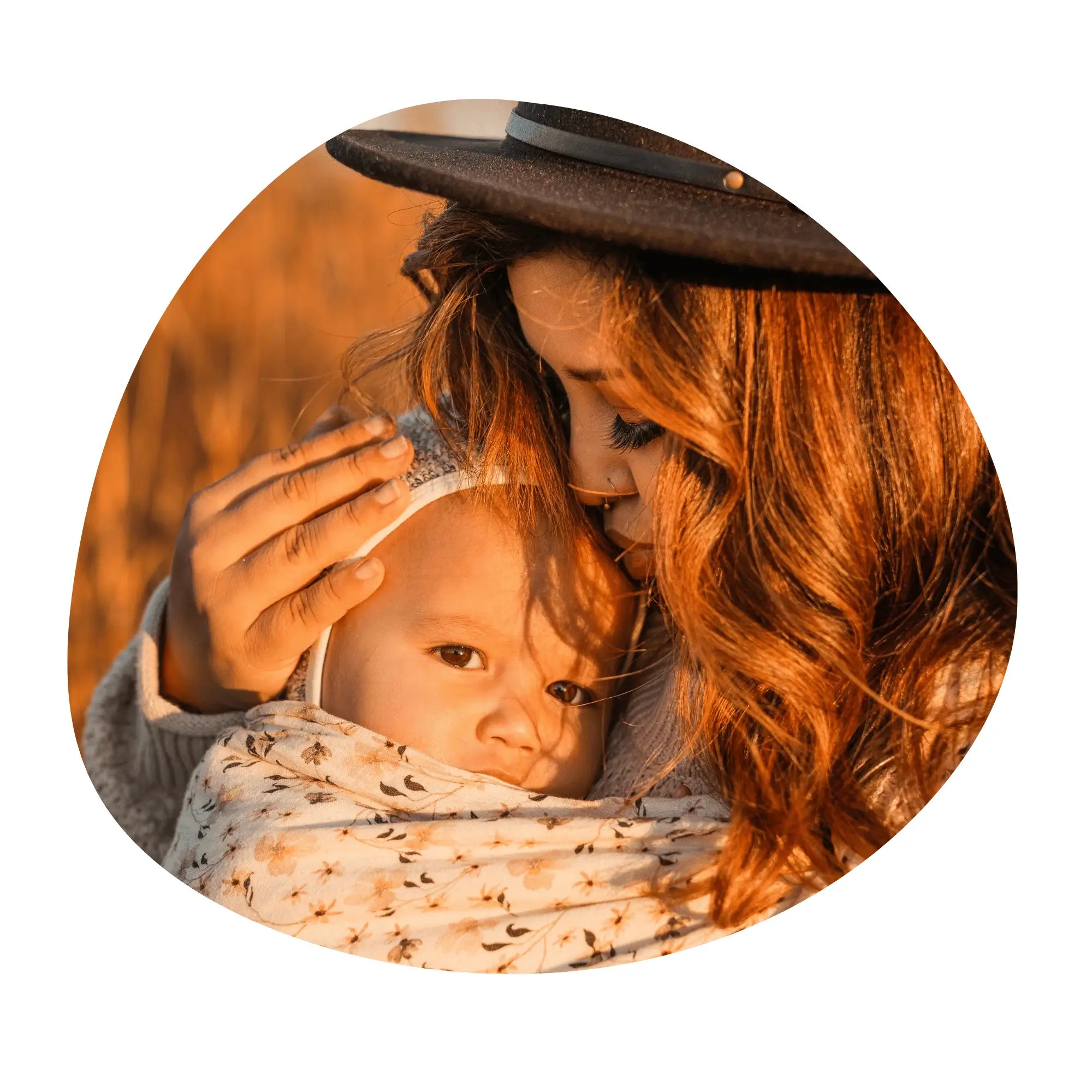
C - Close Enough to Kiss - Your newborn's head should be high enough on your chest so that you can easily bend your neck and kiss the top of their head. You shouldn’t have to extend or strain your neck. You should be able to kiss the baby’s head with a simple downward nod.
K - Keep Chin Off Chest - You should always be able to fit at least two fingers between your newborn’s chin and chest. Newborns' airways are like bendy straws. You never want the straw to close up by folding too dramatically. And newborns lack the neck strength to straighten themselves out. This is where having a baby “In View” will also help. A “Tight” carry where the baby is “Close Enough to Kiss” will also help protect their fragile airway.
S - Supported Back - Your carrier should be tight enough to support your baby’s back/spine/trunk, especially since newborns lack the strength to support themselves. If your carrier is “tight” enough and tightened properly, the baby will be upright with their head leaning on your chest and their back supported appropriately.
You should check for each individually, but, as demonstrated, they work together to ensure a safe fit for your newborn!

Newborn Safety Needs Chart
Newborns Need… |
Because They… |
So Your Carrier Should… |
Head, neck, and trunk support |
Don’t have enough strength yet |
Support baby’s head, neck, and trunk in an upright position so you can be mostly handsfree |
Frequent check ins |
Can easily lose their airway or slump over and have trouble regulating their breathing and body temperature |
Not cover their face or even come higher than their earlobes Allow for high and tight positioning at all times so you can feel and see their breath Allow air circulation and temperature check ins |
To have a clear airway |
Have airways that can easily fold like a bendy straw |
Support their head and neck in an upright position so you can always fit two fingers between their chin and chest |
Gentle knee to knee support |
Have developing hips that can be harmed if spread too wide |
Cinch down or provide alternative leg support that does not spread past baby’s knees |
The Sprout
The Sprout is hope&plum's newest baby carrier. Specifically designed for newborns, the Sprout has many great features of the Lark, but sized down so it's safe and snuggly for our smallest wearees. It's apron style and best worn right below your chest, allowing for a comfy fit post-partum without bulky padding. It's soft and floppy right out of the package so it's ready for newborn snuggles. It features the same wide, cross-back straps you've come to know and love in the Lark, allowing for independent and intuitive wearing ease.

The Sprout is a great newborn buckle carrier option for caregivers on the go. It's intuitive, safe, and comfortable. It will quickly become your favorite newborn option for around the house, short outings, or long activities. Plus, it allows for an easy transition to our Lark Baby Carrier, if you're ready for more support or a back carry.

Baby Wraps
hope&plum baby wraps are stretchy wraps. They are a lightweight tencel/organic cotton blend with two-way stretch that comes in a variety of solid colors and patterns. Our baby wraps are super snuggly and perfect for newborns. One great newborn feature is that their two-way stretch makes them "poppable" carriers. This means you can tie a baby wrap on once and, as long as you get it nice and tight to start off, you can leave it on all day, popping baby in and out as needed!
Need to feed your newborn every two hours? Pop baby out! Need to change that diaper immediately after another change? Pop baby out! Need to get your newborn from your house to your car, their care provider, and the scale to the exam room? Pop baby out, pop baby in, repeat as needed! Always ensure that your fit meets the T.I.C.K.S. guidelines as you use it throughout the day.

The weight limit on our baby wraps is 35 lbs, but unless you get a perfectly tight fit, many people feel like they are not as comfortable or supportive after a baby reaches about 20 lbs. This makes them an ideal newborn carrier!

Ring Slings
Our ring slings provide next level squishy snuggles for your newborn. Honestly, what is sweeter than a tiny newborn face sleeping soundly in a ring sling? hope&plum ring slings are either made from a hemp/organic cotton or linen/cotton blend, both supportive and comfortable. Most babies can fit from birth in a high and tight front carry. Wearing your newborn with their legs out is safe from birth. If your baby loves that newborn scrunch position and simply won’t tolerate having their legs out, the legs in position is also safe, but you should stop this position once your baby is pushing up on the fabric to stand.

Like baby wraps, ring slings are also poppable, but with a few more adjustments each time you take baby in our out. Ring slings are a great option for feeding your newborn, although feeding in the carrier may not be handsfree until your baby has a bit more head, neck, and trunk control. One of the best things about a ring sling is that it will grow with your baby throughout toddlerhood and beyond!

Meh Dais
Meh dais are like the best of both worlds. They provide the same two-shoulder support of a baby wrap, but will grow with your child beyond infancy. hope&plum meh dais are made of hemp/organic cotton blend with an adjustable ring waist and luxuriously wide wrap straps to offer the utmost support!

The meh dai panels are rollable and cinchable to accommodate most newborns from birth. They are a bit easier to learn than the baby wrap or ring sling, so getting that high, tight carry with proper back support and alignment is easier.
Like ring slings, they are an excellent option for feeding a newborn, keeping in mind that it may not be a hands-free activity for a few months. Also, like the ring sling, the meh dai will grow with your infant through toddlerhood and beyond. Older babies and toddlers can easily be worn in a back carry, with many fancy and supportive finish options.
Wait a Second… What about the Lark?!
It’s true – while the Lark is hope&plum’s best-selling carrier, it isn’t for newborns! The weight minimum on the Lark is 10 pounds, but achieving an optimal and safe fit is much more than a weight guideline. We tend to find babies fit well in the Lark when they fit in 3-6 month clothes across brands for both torso height and leg length. And then we always have to go back to T.I.C.K.S. to make sure the baby is high, tight, and properly supported in the carrier.

Here are some additional safety checks you can do with your smaller babies in a Lark:
Top of the Panel - You want to make sure the baby is safely clearing the top of the panel. This means the top of the panel should come no higher than the baby’s earlobes. If the panel comes higher than that, you won’t be able to see the baby as clearly as needed to check on positioning and airway.
Bottom of Panel - You want to ensure the baby safely clears the bottom of the panel. This means the bottom of the panel should support the baby from one knee to the other without going past their knees. Their knees should always be able to bend freely. If not, you could be over-extending your baby’s legs.
Side Gaps - You want to ensure you’re closing off the side gaps so that the baby won’t fall out of the carrier. Some babies may be too small to get the carrier properly tightened to close off any significant gaps between the sides of the panel and the wearer’s body. This puts the baby at a fall risk.
Kissable - As always, you want to make sure the baby’s head is close enough to kiss without straining your neck.
If you can’t check off those four safety guidelines, your baby is still too small for the Lark. You can always schedule a fit check if you’re unsure or want some small baby tips. And you can use your baby wrap, ring sling, or meh dai until the baby can safely fit in the Lark.
If you want to plan for the future, shop all our baby carriers.

Newborn Babywearing FAQ
Is babywearing safe for newborns?
Yes—babywearing is safe for newborns when done correctly. Use a newborn-appropriate carrier and follow T.I.C.K.S. positioning to protect baby’s airway, spine, and hips.
What does T.I.C.K.S. mean in babywearing?
T.I.C.K.S. stands for Tight, In View, Close Enough to Kiss, Keep Chin Off Chest, Supported Back. These safety guidelines ensure proper newborn positioning and airflow.
What is the best baby carrier for a newborn?
The best newborn carriers provide full head, neck, and trunk support. The Sprout, stretchy wraps, ring slings, and meh dais are all safe options from birth when properly fitted.
Can I babywear from birth?
Yes! Many babies can be worn safely from day one. A high, tight, upright position helps newborns feel secure while allowing caregivers to stay hands-free.
Can newborns be worn with their legs out?
Yes. Legs-out positioning is safe from birth when knees are supported and hips aren’t forced wide. Legs-in is also safe for early newborns until they begin pushing up.
Why isn’t the Lark recommended for newborns?
The Lark requires more size and strength than most newborns have. Babies typically fit safely once they’re over 10 lbs and wearing 3–6 month clothing.
How can I tell if my newborn’s babywearing fit is safe?
You should always see baby’s face, kiss their head easily, fit two fingers under their chin, and feel strong back support. When unsure, a fit check can help confirm safe positioning.
Newborn babywearing can feel intimidating, but it doesn’t have to be. With the right carrier, a safe fit guided by T.I.C.K.S., and a little support along the way, you can wear your baby with confidence from day one. Explore newborn-friendly carriers or book a fit check to get started.

Leave a comment
This site is protected by hCaptcha and the hCaptcha Privacy Policy and Terms of Service apply.