
Babywearing & Baby Sleep Safety: How Your Carrier Can Help Baby Snooze Safely
If you know that your baby has a safe babywearing fit to begin with, you should feel confident that they can sleep safely in the carrier as well. Remember a safe babywearing fit means baby is:
close enough to kiss
supported upright by a snug carrier
monitored closely with a focus on a clear airway
Safe sleep is an important consideration for all babies, and baby carrier sleep safety is no exception. Let’s take a closer look at safe sleep practices to make sure our babies can take some worry-free carrier naps.

THE SHORT VERSION
- The safest position for a baby sleeping in a carrier is upright, close enough to kiss, and supported by a snug fit.
- While babies should be placed on their backs to sleep on other surfaces, babies remain upright in their carriers.
- Check if baby needs to be readjusted or the baby carrier needs to be tightened after falling asleep.
- Continue to monitor baby’s breathing and comfort throughout their nap.
- You can sit and rest while babywearing, but don't lie down.
- Caregivers should never sleep while babywearing.
Positioning for Babywearing Sleep Safety
The first way to make sure your baby is safely sleeping in the carrier is to make sure they are positioned upright. Unlike sleeping on other surfaces when babies should be placed on their back to sleep, babies remain upright in their carriers. Whether your goal is a carrier nap or baby happens to fall asleep mid-snuggle, baby’s position should stay the same: upright, close enough to kiss, and supported by an ergonomic baby carrier. The American Academy of Pediatrics takes a similar stance about positioning in its 2022 safe sleep recommendations: "When infant slings and cloth carriers are used for carrying, it is important to ensure that the infant’s head is up and above the fabric, the face is visible, and the nose and mouth are clear of obstructions" (Moon et al., 2022). For babywearing safety, you can always keep T.I.C.K.S. in mind when positioning baby in your carrier, whether they’re asleep or awake:
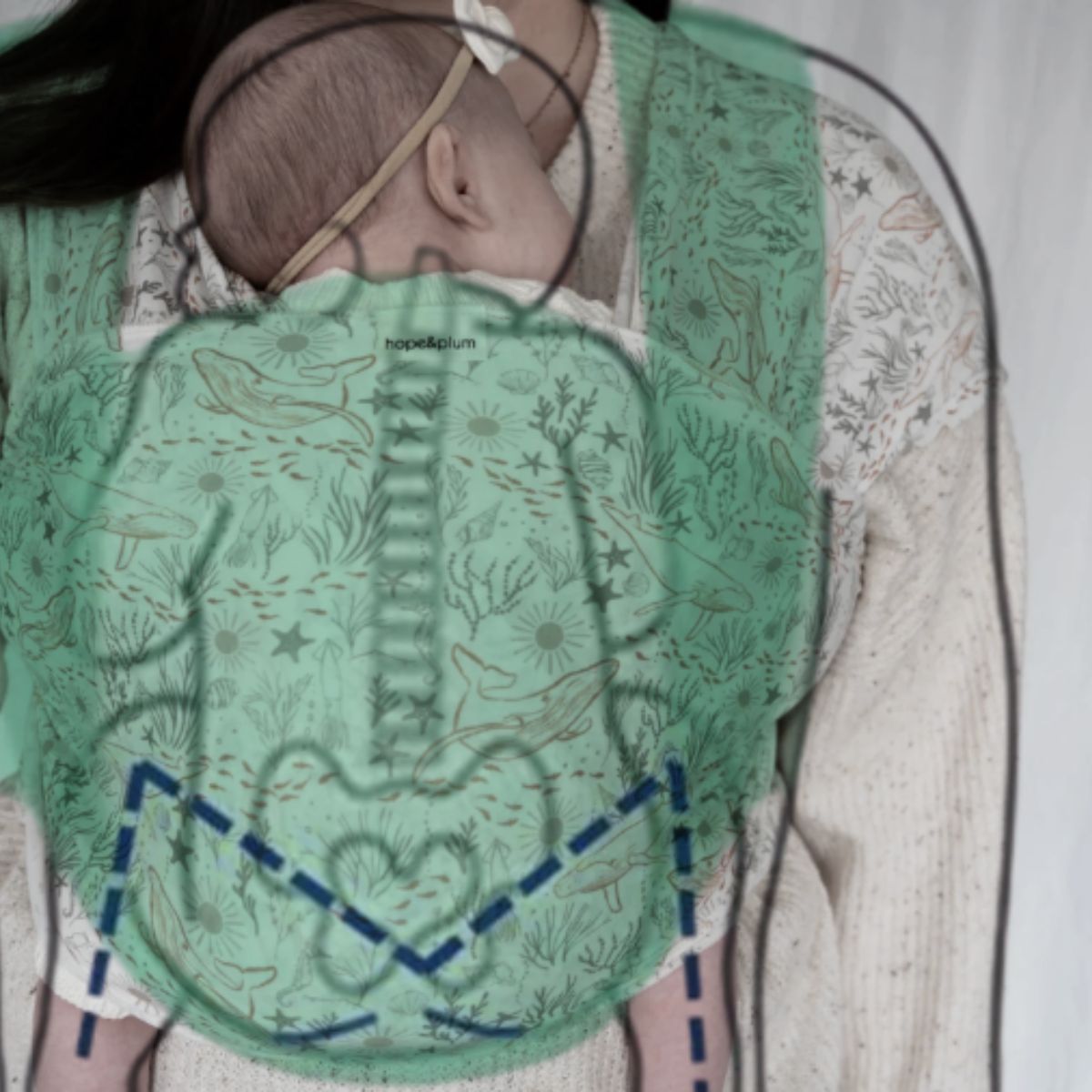
You may notice that baby sags a little bit in the carrier when they fall asleep. This is common, especially with older babies. Once babies are strong enough to hold their heads up and explore the world while in their carriers, they can keep themselves more upright. When they fall asleep, their bodies relax and they lose that control. This means they may need more support from the carrier to stay in a safe position once they slip into dreamland.
How do I adjust my carrier to keep my sleeping baby safe?
Baby sags a little bit in the carrier when they fall asleep
Snug up your carrier to make sure it supports baby in an upright position, close enough to kiss with earlobes above the top of the carrier.
Baby falls asleep mid-feed
Snug baby back up when they're done. Gently tighten your carrier so baby returns to a snug, upright position.
Baby stirs a bit
Add in some bounces and butt pats. After they calm down, make sure the carrier is supporting them in a snug, upright position.

How Do Babywearing Caregivers Get Rest Too?
Although caregivers should never sleep while babywearing, baby snoozing in the carrier can be so helpful. Carriers are great for on-the-go naps or to help a fussy baby, or even toddler, calm down enough to fall into a deep sleep. But, sleeping in the carrier won’t work for every snooze. For those longer night stretches, especially as baby grows, it’s important to get baby to sleep on another safe surface so you can get some rest too!
While getting a safe babywearing fit is important, safe babywearing doesn’t stop there. Babies, especially newborns and young infants, need frequent check-ins to make sure they stay safe in the carrier. Sleeping caregivers can’t do these check-ins. What’s more, we all completely relax when our bodies are in a deep sleep. In that relaxed state, we can compromise baby’s positioning and safety without even knowing it.
Staying awake while babywearing sounds easy, but the sleep deprivation when raising kids is real. You can sit and rest while babywearing, but never lie down. This will help prevent you from dozing off, and it’s hard to keep baby in a safe position if you’re laying down anyway. If you feel yourself drifting off, get up and move around or choose an activity that keeps you occupied while sitting and resting. If you can, listen to your body’s need for sleep and hand baby off to another caregiver or place them in a safe place so you can get some sleep too.

Baby Carrier Sleep Safety: Do's & Dont's
Here’s a helpful list of do’s and dont’s for baby sleep safety while babywearing:
Do…
Keep baby in an upright position
Check if baby needs to be readjusted after falling asleep
Keep on going while baby snoozes away – that's what babywearing naps are for!
Continue to monitor baby's breathing and comfort throughout their nap
Don't…
Sleep or lie down while wearing your baby
Let baby's neck or trunk slump when they're relaxed and sleeping
Leave baby in a lowered position if they fall asleep mid-feed
Be afraid to adjust baby even if they're sleeping. Some butt pats and rocking will get them back asleep in no time.

Baby Carrier Sleep Safety FAQ
Is it safe for baby to sleep in a baby carrier?
Yes! As long as baby has a safe babywearing fit to begin with, you should feel confident that they can nap safely in the carrier as well. A safe babywearing fit means baby is close enough to kiss, supported upright by a snug carrier, and monitored closely with a focus on a clear airway.
How should baby be positioned to sleep in a carrier?
Babies should always be positioned upright in their carriers. Sleeping in the carrier is no different: upright, close enough to kiss, and supported by a proper fit. This is different than the recommendation to place babies on their backs to sleep on other surfaces.
Why does my baby slump in the carrier when they fall asleep?
When babies fall asleep, their bodies relax and they lose the muscle control keeping them more upright when awake and alert. If you notice slumping, snug up your carrier a bit to make sure it’s supporting baby in an upright position so they’re close enough to kiss with earlobes above the top of the carrier.
What should I do if baby falls asleep while lowered for feeding in the carrier?
If you’ve loosened your carrier to feed baby and they fall asleep mid-feed, make sure you snug baby back up when you’re done, returning to a supported, upright position.
Can I sleep while babywearing?
No! Caregivers should never sleep while babywearing. We all completely relax when our bodies are in a deep sleep. In that relaxed state, we can compromise baby’s positioning and safety without even knowing it. Plus, to make sure baby stays in a safe position while sleeping in the carrier, you should do periodic airway and positioning checks. You can't do that if you're asleep too!
Can I lie down or rest while wearing my baby?
You can sit and rest while babywearing, but never lie down. This will help prevent you from dozing off, and it’s hard to keep baby in a safe position if you’re lying down anyway.
My baby only wants to sleep in the carrier. Is that okay?
Sleeping in the carrier won’t work for every snooze. It can work for naps, but not for those longer night stretches, especially as baby grows. For nighttime sleep, it’s important to get baby to sleep on another safe surface so you can get some rest too!
How often should I check on a sleeping baby in a carrier?
Babies, especially newborns and young infants, need frequent check-ins (every 5-10 minutes or so) to make sure they stay safe in the carrier. Continue to monitor baby’s breathing and comfort throughout their nap.
References
Moon, R. Y., Carlin, R. F., & Hand, I. (2022). Sleep-related infant deaths: Updated 2022 recommendations for reducing infant deaths in the sleep environment. Pediatrics, 150(1). https://doi.org/10.1542/peds.2022-057990
Meet the Author

Jenn Tolisano
Jenn Tolisano is hope&plum's Director of Community Education & Content. She has been a babywearing educator for over ten years. Working as a high school teacher before entering the world of motherhood, she has brought her passion for education to all things baby carriers. Babywearing has been such an essential parenting tool in her household that she wants to spread the babywearing love to all families. Jenn believes that every caregiver deserves to have a baby carrier they love and feel comfortable and confident in. She hopes that her fit checks and blog-writing with hope&plum help to achieve that goal!

Leave a comment
This site is protected by hCaptcha and the hCaptcha Privacy Policy and Terms of Service apply.