
Skip to content

Cart

Your cart is empty

Guide to Tandem Babywearing: Can I Wear Two Babies at Once?

What is tandem babywearing? Tandem babywearing is the practice of carrying two children at the same time in two separate baby carriers. It's an advanced skill, but with the right carrier combo and a little practice, most caregivers can do it safely.
Below: the safety rules, the best carrier combos for your kids' ages and stages, and what to skip entirely.
Tandem Babywearing Two Kids, One Caregiver
Shop Carriers

The Short Version

  • Tandem babywearing means wearing two babies at once—and most caregivers can do it safely with practice and proper setup.

  • Follow all standard babywearing safety rules (T.I.C.K.S.) for each child, plus developmentally appropriate carry positions.

  • Use one carrier per child and load your back child first, when possible, for safer and easier setup.

  • The most popular tandem combo: wrap on front + Lark/meh dai back carry for independent, adjustable carries.

  • Start slow, build strength gradually, and always listen to your body—tandem babywearing is an advanced skill that takes practice.

General Babywearing Safety

When wearing more than one child, your safety concerns multiply. Everything that applies to wearing one child safely applies to tandem babywearing, but you just have more children to monitor. As always, you want to follow the T.I.C.K.S. guidelines:

Babywearing Safety Check T.I.C.K.S. Rules for Safe Babywearing Tap a letter to learn what it means and why it matters for your baby.
↑ Tap any letter above to see the safety rule
A caregiver wears their baby snug in a hope&plum carrier on their front

T: Tight

Your carrier should be snug enough to hug baby close to your body. A loose carrier lets baby slump down, which can block their airway.

Why it matters: A snug fit keeps baby's chin off their chest and their airway open. If you can fit a flat hand between you and baby, it's too loose.

A caregiver smiles down at their baby worn on their front in a hope&plum carrier. Baby smiles back.

I: In View at All Times

You should always be able to see baby's face by glancing down. Fabric should never cover their nose or mouth.

Why it matters: Pull the top hem to the nape of a newborn's neck, never over their head. You need a clear view to spot any positioning issue right away.

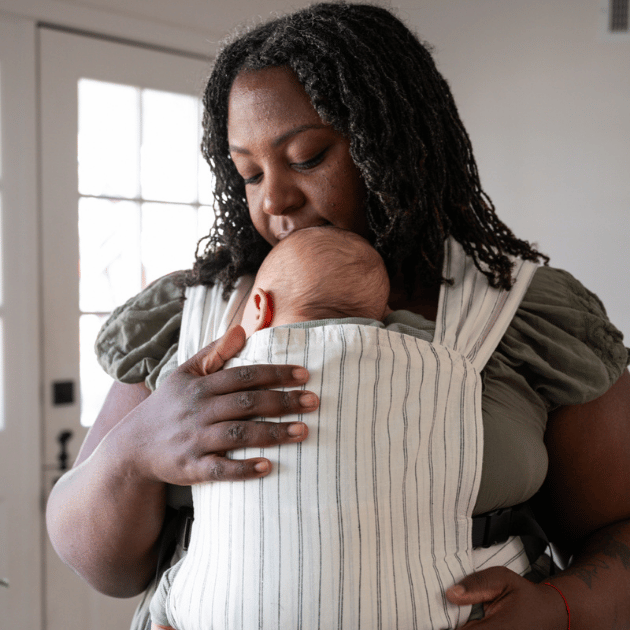
A caregiver kisses the top of their baby's head who they wear on their front in a hope&plum carrier

C: Close Enough to Kiss

Baby's head should be high enough on your chest that you can tip your chin down and kiss the top of their head.

Why it matters: If baby is too low, their chin can drop to their chest and restrict their airway. Higher is always safer.

A caregiver wears an alert baby on their front in a hope&plum carrier

K: Keep Chin Off the Chest

There should always be at least two fingers' width of space between baby's chin and their chest.

Why it matters: A chin-to-chest position can compress the airway. Check this every few minutes, especially when baby falls asleep.

A close up of a newborn's c-shape while worn in a hope&plum carrier

S: Supported Back

Baby's back should be supported in its natural position, with their tummy and chest against you. Knees should sit higher than their bottom in a spread-squat (M-shape) position.

Why it matters: Proper back support keeps baby's spine in a healthy C-curve (or J-curve for older babies) and protects their developing hips.

Not sure if your fit passes the T.I.C.K.S. check? Get a free virtual fit check with our team, and we'll make sure baby is safe and comfy. Book a Free Fit Check
Safe Positioning The M-Shape: Supporting Baby's Legs Your carrier should support your child's legs in a spread squat position with their knees higher than their bottom.
Quick Check
  • Carrier reaches knee pit to knee pit (close to it, never past)
  • Knees sit higher than bottom in a spread squat
  • Legs form an M-shape, not straight or dangling
A close up of a newborn worn in a hope&plum ring sling with a dramatic M-shape to their legs and bottom
Dramatic M Wraps & Ring Slings Knees ride high above bottom. The fabric molds around baby, creating a deep, supportive squat.
A close up of an infant worn in a hope&plum Sprout with a gentle M-shape to their legs and bottom.
Gentle M Larks, Sprouts & Meh Dais Knees sit just above bottom. The panel provides structured support without exaggerated angle.
Wearing a Toddler or Little Kid? The carrier may no longer reach your child's knee pits, and that's okay. Seasoned wearees naturally tuck their knees into a spread squat. It's only a problem if it's uncomfortable for either of you. If that happens, look into a bigger carrier. More in our toddler wearing tips and tricks post.

Tandem Babywearing Safety

Tandem Safety First 5 Rules for Safe Tandem Babywearing When you're wearing two kids at once, keep these points in mind. Tap any rule to expand.
We only safety test for one child at a time, so we can't confidently say a carrier will support more than one child at a time. Every tandem carry uses two separate carriers, one per kid.
Newborns belong on your front. Babies can move to a hip carry when they can be held on your hip with minimal support, or when they're rolling in either direction. Back carries start when baby is sitting unassisted (you can plop them on the floor and they hold themselves up). Always carry each kid in a position they're actually ready for, regardless of what's convenient for tandeming. Why this matters for tandemTwo newborns can't be safely tandemed, since both would need to be centered on your front. We recommend waiting until both kids are ready for at least a hip carry.
When possible, set up your front carrier, set up your back carrier, load your back child, then load your front child. That order lets you do all the bending and scooting for your back carry without a baby already on your front. This is especially important when your front child is an infant who needs extra support and monitoring. Pro tipIf your back child is old enough, have them stand on a chair or couch and climb onto your back like a piggyback ride. You stay upright, they get in faster, everyone wins.
When you set up your carriers, make sure they don't block each other's straps or waistbands. For example, if you're using a Lark on the front and a meh dai on the back, tuck the meh dai waistband and shoulder straps under the Lark webbing so you can still tighten everything freely. You should be able to adjust both carriers even when both are loaded.
If you hurt yourself trying to wear two kids, you may not be able to wear any kids while you heal. Start with 5 to 15 minutes. If it feels good, add more time tomorrow. If it doesn't, stop and try again later, maybe for even less time. You wouldn't bench press your bodyweight on your first day at the gym, so don't expect to hike a mountain with two kids strapped to you on day one. If you're postpartumFollow any lifting guidelines from your provider. Even if you wore your toddler through pregnancy, start tandem sessions short and build up.

Tandem Babywearing by Age

Find Your Combo Best Carrier Combos for Tandem Babywearing Tap your situation to see the recommended carrier pairing, why it works, and what to know.
A white straight size woman wears a demo doll on her front in a hope&plum wrap and a toddler on her back in a Lark
Top Pick Baby Wrap + Lark Wrap on front · Lark on back Our favorite tandem combo. Pre-tie the wrap, set up and load your Lark on your back, then pop your infant into the wrap on your front. The best part: you can take each kid in and out without disturbing the other, so two naps to one nap is no problem.
Pick this if: You have one infant in their first few months and one older baby or toddler who's sitting unassisted.
"With 2 little ones 18m apart who both love to be worn, tandem carry with a Lark and H&P stretchy wrap has been a lifesaver! The Lark is comfy enough and easy enough that I can tandem carry without any assistance and wear them both for decently long periods (40+ lbs combined!)." Andrea L., Daisy Lark Baby Carrier
A straight size BIPOC woman wears a demo doll on her front in a hope&plum Baby Lark and a big kid on her back in a Kid Lark
Best for Older Kids Two Larks or Lark + Meh Dai One on front · One on back Both kids need to be sitting unassisted and fitting safely in the carrier. Load and unload your front child from the top so you don't bother your back child. Don't be a hero, start with short tandem sessions and build up.
Pick this if: Both your kids are sitting unassisted and you want maximum support for two heavier wearees.
"Bought my first lark in fete and loved it so much I decided to buy a backup for my second child. Found out about tandem wearing so I'll wear both my girls while hiking (one on back and one in the front), they love it and are comfortable the whole time." Amber M., Fête Lark Baby Carrier
A white straight size woman wears two infants on opposite hips in two different hope&plum meh dais
For Twins Two Meh Dais (Double Hip) One on each hip The only safe way we recommend wearing two infants at once. Both babies need to be ready for a hip carry: held on your hip with minimal support OR rolling in either direction. Set up each meh dai, then load each baby separately. Two newborns can't be tandemed because both would need to be centered on your front.
Pick this if: You have two infants who are both ready for a hip carry and you want maximum versatility.
"I love love my meh dais! I bought two because I have twins and was desperate for something to get myself hands free, especially because I also have a three and five year old." Brittany G., Meh Dai Baby Carrier
Still not sure? Book a free fit check and we'll help you tandem like a pro.

Tandem Babywearing by Carrier

Already Chose a Combo? Tandem Combo Quick Reference Tap a combo to see how to set it up, who it's for, and what to watch for.
A straight size BIPOC woman wears a demo doll on her front in a hope&plum wrap and a big kid on her back in a meh dai

Baby Wrap + Lark or Meh Dai

Wrap on front · Lark or meh dai on back
Age/DevelopmentFront (wrap): newborn and up, within weight, size, and comfort limits. Back (Lark or meh dai): sitting unassisted.
Independent Carriers?Yes, especially if back child can climb down and stand on their own.
Back Child First?Yes.
Fit NotesFancy meh dai finishes are hard with both carriers on. Skip them.
A straight size BIPOC woman wears a demo doll on her front in a hope&plum Sprout and a big kid on her back in a Kid Lark

Sprout + Lark or Meh Dai

Sprout on front · Lark or meh dai on back
Age/DevelopmentFront (Sprout): newborn and up, within weight and size limits. Back (Lark or meh dai): sitting unassisted.
Independent Carriers?Challenging. Hard to get either kid out without disturbing the other.
Back Child First?Yes, but load the Sprout from the top with baby. You may not be able to do fancy meh dai finishes.
Fit NotesTightening the Sprout is more difficult with a back carry already in place.
A straight size white woman wears a demo doll in a hope&plum ring sling on her front and a toddler in a Lark on her back.

Ring Sling + Lark or Meh Dai

Ring sling on front or hip · Lark or meh dai on back
Age/DevelopmentRing sling: newborn and up for front, hip-ready for hip carry. Back (Lark or meh dai): sitting unassisted.
Independent Carriers?Yes, but loosening and tightening the ring sling may be tricky.
Back Child First?Yes. Ring sling tightening is more difficult once back baby is in.
Fit NotesOne-shoulder carry plus extra weight can get uncomfortable on longer wears.
A white straight size woman wears two infants on opposite hips in two different hope&plum meh dais

Two Meh Dais (Double Hip)

One on each hip
Age/DevelopmentBoth babies need to be held on the hip with minimal support OR rolling in either direction.
Independent Carriers?Possible but difficult to remove the kid in the "lower" meh dai without taking the other out first.
Back Child First?No back child in this setup.
Fit NotesHip carries in a meh dai can get uncomfortable. Tightening the second carrier is harder.
A straight size BIPOC woman wears a demo doll on her front in a hope&plum Baby Lark and a big kid on her back in a Kid Lark

Two Larks, Two Meh Dais, or Lark + Meh Dai

One on front · One on back
Age/DevelopmentFront in a meh dai: newborn and up. Front in a Lark: fitting safely in 3 to 6 month clothes. Back: sitting unassisted.
Independent Carriers?Yes, but load and unload the front kid from the top.
Back Child First?Yes, then load front kid from the top.
Fit NotesFancy meh dai finishes are hard. Pre-buckle Larks before loading from the top.
Tandem No-Nos Never put more than one baby in the same carrier. Never use a carrier in a position it's not designed for (no ring slings for back carries). Never put a baby in a position they aren't developmentally ready for.

Tandem Babywearing FAQ

What is tandem babywearing?

Tandem babywearing means wearing two babies or children at the same time using two separate carriers. Many parents tandem wear a newborn and a toddler to stay handsfree while meeting both children’s needs.

Is tandem babywearing safe?

Yes, tandem babywearing is safe when done correctly. Each child should be secured in their own carrier and follow standard babywearing safety guidelines like T.I.C.K.S. Always ensure clear airways, proper positioning, and age-appropriate carry methods.

Can I tandem wear a newborn and a toddler?

Yes, this is one of the most common tandem babywearing setups. The newborn should be worn on the front in a wrap or soft structured carrier, while the toddler is worn on the back—if they have the trunk strength for back carrying.

Do I need special carriers for tandem babywearing?

You don’t need special carriers, but you do need two separate carriers.

Which baby should I put on first?

Experienced babywearers recommend loading the back child first (usually the older child), then securing the front baby. This helps maintain balance and stability while getting both children safely positioned.

When can I back carry while tandem babywearing?

Back carrying is appropriate when the baby has strong head, neck, and trunk control. Newborns should not be back carried. Always follow developmental readiness rather than just age.

Is tandem babywearing hard on your body?

Tandem babywearing is more physically demanding than wearing one child. Start slowly, build strength gradually, and pay attention to posture and even weight distribution. If you feel pain or strain, take a break and reassess your setup.

What are the benefits of tandem babywearing?

Tandem babywearing allows you to meet the needs of two children at once while keeping your hands free. It can support bonding, make outings easier, and help older siblings adjust to a new baby.

Ready to Tandem? Two kids, one caregiver, hands free. Tandem babywearing takes practice, but with the right carriers and a little help, you can do this. Shop our full carrier collection or book a series of free fit checks with one of our educators.

Meet the Author

A BIPOC straight size woman smiles at the camera while standing in profile and wearing a baby on her back in a meh dai

Jenn Tolisano

Jenn Tolisano is the Director of Community Education & Content at hope&plum. She has been a babywearing educator for over ten years. Working as a high school teacher before entering the world of motherhood, she has brought her passion for education to all things baby carriers. Babywearing has been such an essential parenting tool in her household that she wants to spread the babywearing love to all families. Jenn believes that every caregiver deserves to have a baby carrier they love and feel comfortable and confident in. She hopes that her fit checks and blog-writing with hope&plum help to achieve that goal!
Leave a comment

This site is protected by hCaptcha and the hCaptcha Privacy Policy and Terms of Service apply.

All comments are moderated before being published.

✦ fresh reads ✦

Carry on reading

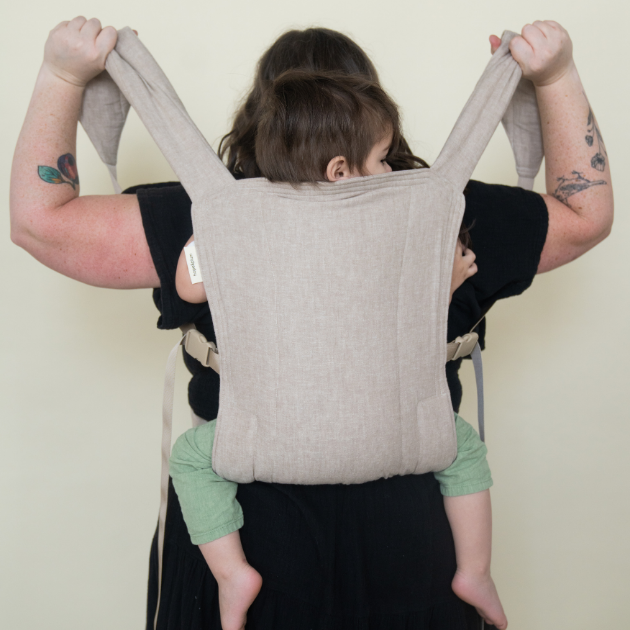
a plus size white woman holds both hope&plum Lark strap above her head to tighten her baby in a back carry
Baby Carrier Tips

How Do I Fix My Baby Carrier Fit? Common Babywearing Problems & Solutions

Is your baby carrier fit off? Learn how to fix the most common babywearing problems by carrier — from neck creep to a deep seat — with hope&plum.

Read more on our blog
Take 10% off your first order

Never miss a drop.

Get on the list

Drop pre-alerts, restock notifications, fit tips, and the occasional cheeky video. No spam, no BS, easy to unsubscribe anytime.