
Baby carriers for every stage.
From day one through the "my legs stopped working" phase. Built for comfort, safety, and the way little bodies actually grow.
Find the style that fits your life.
Different stages, different needs. Each style is built for where your baby is right now.
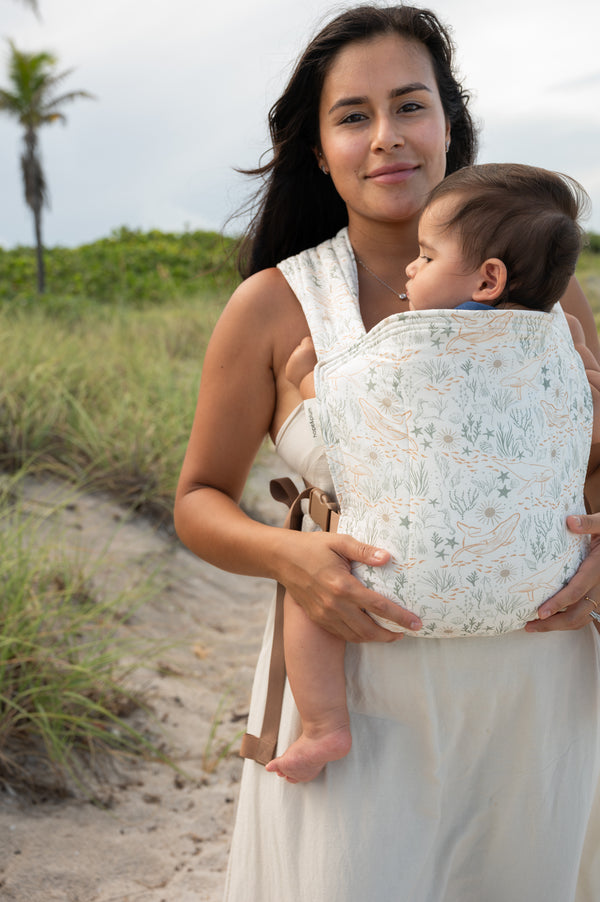
Lark Baby Carrier
10–45 lbs · ~3 mo to 3 yrs
Our buckle carrier built to grow with you. Three panel sizes, ergonomic support, and easy to put on solo.
Shop Lark Baby Carriers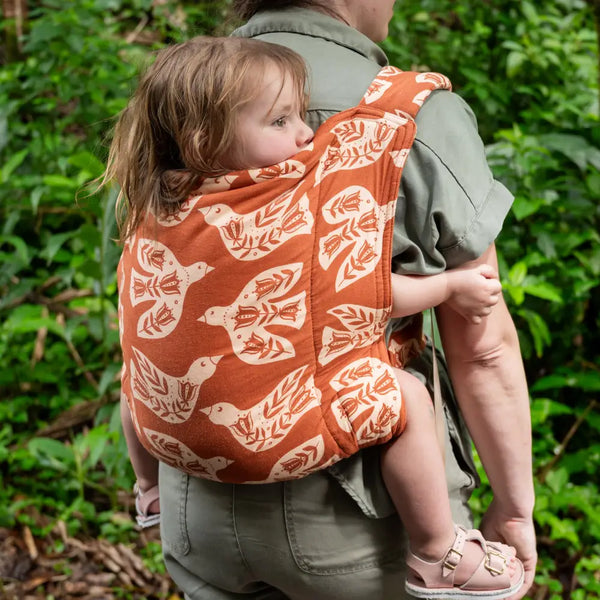
Lark Kid Carrier
25–65 lbs · ~size 3T+
For when their legs "stop working" at the grocery store. Bigger panel, same easy fit, holds up to 65 pounds.
Shop Lark Kid Carriers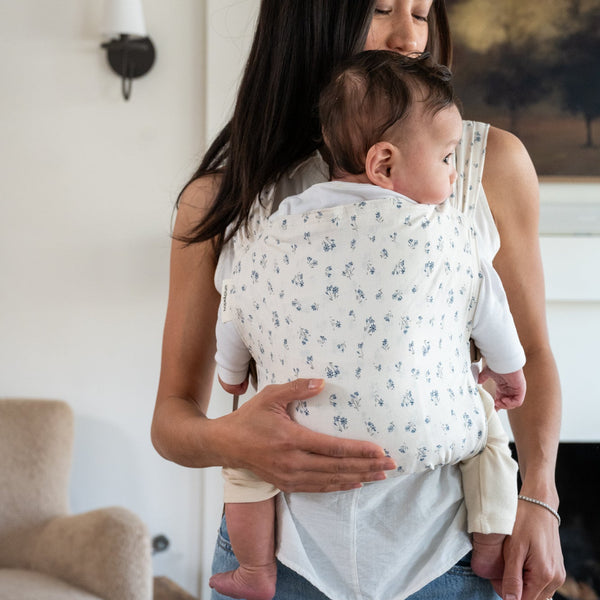
Sprout Newborn Carrier
7–24 lbs · 0 to ~12 mo
Buckle and go. Newborn-specific support you can put on in seconds: no tying, no fussing.
Shop Sprout Carriers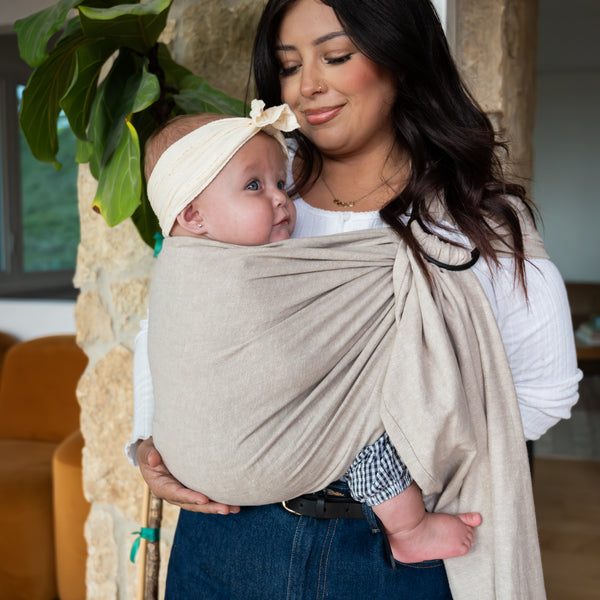
Ring Sling
7–35 lbs · birth to toddlerhood
Best for nursing and quick ups-and-downs. Adjusts in seconds for one-handed wrangling when they need you right now.
Shop Ring Slings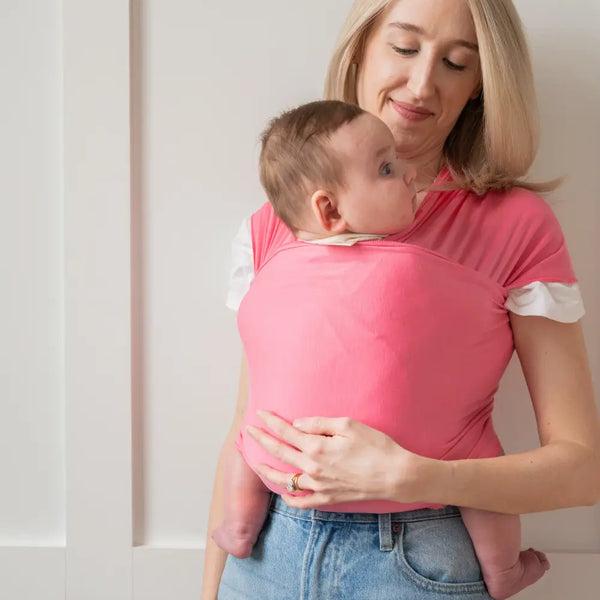
Baby Wrap
7–35 lbs · 0 to ~9m
A long stretchy wrap perfect for that cozy, womb-like feeling and precious skin-to-skin bonding.
Shop Wraps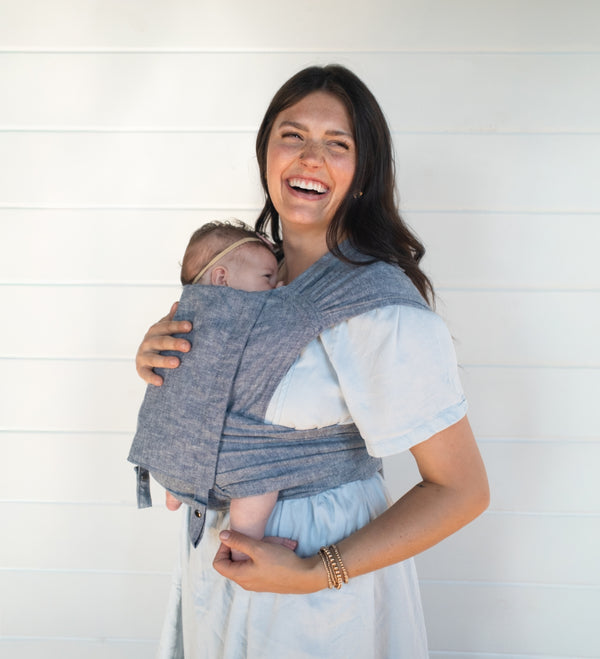
Meh Dai
7–35 lbs · birth through toddler
Structured support without buckles. Ties mold to your body and distribute weight evenly across both shoulders.
Shop Meh DaiReal reasons. Not the fluffy ones.
Pick your situation.
Ring slings especially are built for discreet, on-the-go nursing. Adjust, feed, keep walking. No hunting for a bench, no cover fumbling, no interrupting what you were doing. Once you figure it out it becomes second nature.
Skin-to-skin contact during nursing boosts oxytocin for both of you, which supports milk supply and bonding at the same time. The science and the practicality actually line up here.
Carrying your baby upright counts as tummy time. It works the same neck, back, and core muscles without the floor protests.
And babies in carriers are at adult eye level: they hear real conversation, see faces, track movement, and experience the world as you move through it. That's not passive stimulation. That's actually what early cognitive development looks like!
M-position endorsed by the International Hip Dysplasia Institute.
Gravity helps with reflux. Being upright, with your chest to your stomach, keeps acid down in a way no swing or bouncer can replicate.
The rhythmic motion of walking does something to the nervous system that is genuinely hard to manufacture any other way. Colic is under-explained by science, but consistent evidence points to motion, closeness, and warmth as the best available tools.
For babies with reflux or colic, babywearing isn't a nice-to-have. It's often the first thing that works.
Swings, bouncers, rockers: those are containers. Baby goes in, you step away, baby sits. A carrier is the opposite. Your baby is with you, moving when you move, hearing what you hear, engaged with the world while you get things done. That's hands-free and active stimulation at the same time.
It also means you're not tied to a stroller. Airports, farmers markets, cobblestone streets, bathrooms where the door opens the wrong way: a carrier goes everywhere a stroller turns into a negotiation.
Our carriers distribute weight across your hips and both shoulders, not just your lower back. The difference between a well-designed carrier and a cheap one is the difference between "I could do this all day" and "I gave up after 20 minutes."
Properly fitted, the weight transfers to your hips the same way a well-packed hiking pack does. Your baby is heavy. Your carrier should work with your body, not against it!
A landmark study had parents carry their babies at least three extra hours a day. Crying dropped 43% overall, and 54% at night. That's not a fluke.
Physical closeness regulates cortisol (the stress hormone), stabilizes heart rate and breathing, and recreates the motion and warmth your baby knew before birth. The fourth trimester is a real thing, and a carrier is an amazing way to support it.
Hunziker & Barr, Pediatrics, 1986 — one of the most replicated studies in infant care research.
Skin-to-skin contact triggers oxytocin, the bonding hormone, in the parent, not just the baby. Consistently elevated oxytocin is linked to lower rates of postpartum anxiety and depression.
The research on parental mental health and babywearing is increasingly clear: contact matters for you too. You don't have to be struggling to benefit. But if you are, it's worth knowing the carrier you just ordered is also doing something for you.
Feldman et al. on kangaroo care and parental oxytocin; multiple studies linking skin-to-skin contact to reduced postpartum anxiety scores.