


Are Baby Carriers Considered Baby Containers? A Pediatric PT Weighs In

Dr. Bonnie Soto says: As a pediatric PT, anytime I mention babywearing as a means to avoid excessive container device usage I immediately get asked the same question: Doesn't a baby carrier contain a baby? Why isn't a baby carrier considered a container toy too? Technically speaking, sure it does contain a baby! But the way in which it is done is quite different. To answer the popular question "Are baby carriers considered baby containers?" let's explore a baby's experience in a container toy and compare that to their experience in a baby carrier.
THE SHORT VERSION
While baby carriers do technically contain your baby, the way they support your baby’s development is significantly different from traditional container toys.
Excessive use of baby containers can lead to developmental concerns such as movement difficulties, physical issues, and developmental delays.
Baby carriers provide proximity, varied movement, and developmental support that container toys often lack.
Babywearing is a powerful way to reduce reliance on container toys.
You don’t have to be perfect or have a container toy-free household. Making informed decisions and varying baby's time in containers, carriers, and moving freely strikes a practical balance.
Table of Contents
What Are Container Toys?
Unlike baby carriers, container toys are designed to keep babies in a fixed position, which can sometimes restrict their movement. Excessive use of these devices can lead to developmental concerns such as movement difficulties, physical issues, and developmental delays:
- Movement Difficulties: Overuse of container toys can delay milestones like rolling, tummy time, sitting, crawling, and walking.
- Physical Issues: Prolonged use may lead to problems such as head flattening, facial asymmetry, torticollis, toe walking, and overall decreased body strength.
- Developmental Delays: These toys can contribute to delays in vision, cognitive skills, and speech.
Are Baby Carriers Considered Baby Containers?
The real differences between carriers and containers
| Baby Carriers | Baby Containers | |
|---|---|---|
| Type of Movement | Expose baby to a wide variety of movements and position changes | Designed to keep babies in a fixed position, can restrict movement |
| Baby's Positioning | Hold baby’s spine and hips to support proper musculoskeletal development | Can place excess stress on baby's spine and hips and restrict natural movement |
| Interaction with Caregiver | Position baby on caregiver's body, improve caregiver and infant connection, discourage crying, and encourage feelings of contentedness and safety | Separate baby from caregiver's body and allow baby to be left alone and isolated for an unrestricted amount of time |
| Impact on Physical Development | Expose baby to a variety of movements, helping baby’s sensory and motor development | Can delay milestones like rolling, tummy time, sitting, crawling, and walking if overused |
| Impact on Cognitive & Language Development | Support cognitive and language development | Can contribute to delays in vision, cognitive skills, and speech if overused |

While baby carriers do “contain” your baby, their impact is quite different from that of traditional container toys.
Proximity and Connection
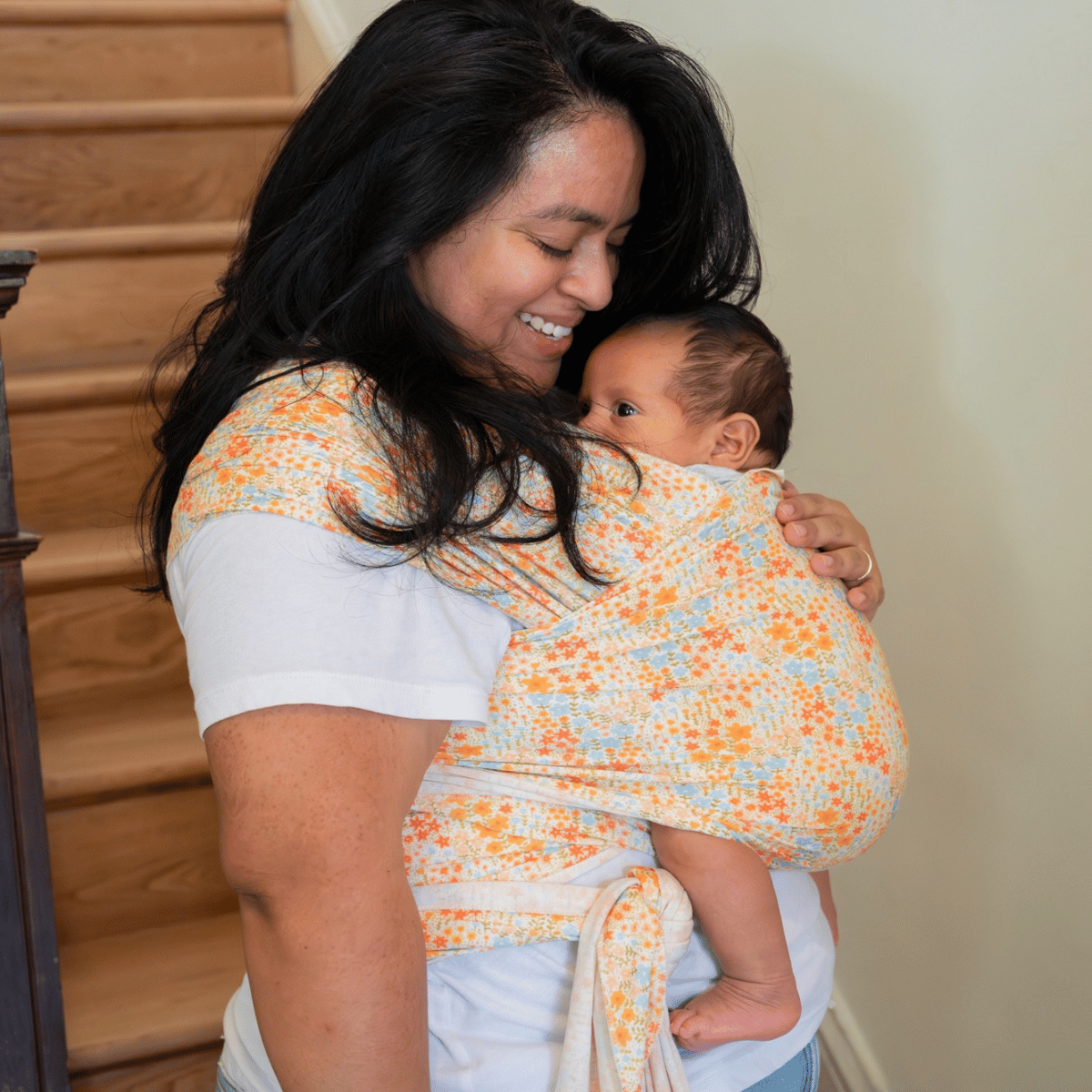
In a baby carrier, your infant is held close to their caregiver, which supports their nervous system and improves heart rate, breathing, and circulation. The caregiver is right there to note any changes in an infant's needs, from early signs of hunger to discomfort. The infant is able to communicate with more subtle cueing like rooting, squirming, and vocalizations. This leads to improved caregiver and infant connection, improved communication, less crying, and further feelings of contentedness and safety. It also positively affects nursing and milk supply.
Variety of Movements
Baby carriers expose your baby to a large variety of movements and position changes. As you move around—whether taking care of other children, running errands, doing house chores, strolling the neighborhood, exercising, or hiking—your baby experiences different motions. The exposure to a variety of movements while being worn in a baby carrier helps a baby's sensory and motor development. This directly contrasts with the repetitive movements in many container toys.

Developmentally Appropriate Positioning
A well-designed baby carrier supports your baby’s spine and hips in a way that promotes proper musculoskeletal development. This is in contrast to many container toys, which can place excess stress on these areas and restrict natural movement.
Enhanced Interaction
Being in a baby carrier means your baby is exposed to a lot of variable movement and improved communication as they interact with their environment and you. This interaction supports cognitive and language development, something that is less pronounced when a baby is alone in a container toy.

Recommendations for Minimizing Container Toy Use
To support your baby’s development while managing the practical demands of parenthood, consider these recommendations:
Limit Your Registries
Don’t register for more than a bouncer (not a jumper). While having a place for your baby other than the floor is useful, excessive devices can lead to overuse. Instead, register for one or two baby carriers that will work from birth like a ring sling, meh dai, or baby wrap. You can also register for gift cards and choose container toys thoughtfully as your baby grows.

Create Safe Play Spaces
Invest in play areas like pack n plays and bassinet-style stroller systems. These allow for free movement and should be part of your daily routine from the start.
Wean from Swaddling Early
If possible, consider swaddle free naps, contact naps, and baby carrier naps. Movement during sleep is just as crucial as during wake hours.
Opt for a Bassinet Stroller
Using a bassinet stroller instead of a car seat with a stroller travel system provides more freedom of movement. Alternatively, starting with a convertible car seat can offer varied positioning. Opt for transferring baby from the convertible car seat to a baby carrier rather than carrying around a heavy infant seat.

Embrace Babywearing
Babywearing is a powerful way to reduce reliance on container toys. Finding a baby carrier or two (or five...) that works well for your body and your baby can be transformative. It allows you to stay connected with your baby, promotes development, and keeps your hands free!

Baby Carriers vs Baby Conatainers FAQ
Are baby carriers considered baby containers?
No, baby carriers are not considered baby containers. While they do technically contain your baby, they support development in significantly different ways than traditional container toys.
What are the downsides of container toys?
Unlike baby carriers, container toys are designed to keep babies in a fixed position, which can sometimes restrict their movement. Excessive use of these devices can lead to developmental concerns such as movement difficulties, physical issues, and developmental delays. Overuse can also lead to delays in vision, cognitive skills, and speech.
What benefits do baby carriers provide that baby containers do not?
Baby carriers provide proximity, varied movement, and developmental support that container toys often lack.
How do baby carriers affect a baby's movement and motor development?
Baby carriers expose your baby to a large variety of movements and position changes. This exposure helps a baby’s sensory and motor development, which directly contrasts with the repetitive movements in many container toys.
How does babywearing affect connection, crying, and communication?
When worn in a carrier, the baby's caregiver is right there to note any changes in their needs from early signs of hunger or discomfort. Quicker reaction to cues improves caregiver and infant connection and communication, leads to less crying, and promotes feelings of contentedness and safety for baby.
Can I use a baby carrier instead of a container toy?
Yes! Babywearing is a powerful way to reduce reliance on container toys. It allows you to stay connected with your baby, promotes development, and keeps your hands free.
Do I need to avoid container toys completely?
No. Having one or two container toys is fine, as long as you balance their use with holding baby or babywearing and giving baby free movement time in a safe space.
Meet the Authors

Dr. Bonnie Soto
Bonnie is a practicing pediatric physical therapist (x 13 years) and Certified Babywearing Consultant. Bonnie has practiced in early intervention, inpatient (NICU/PICU), and outpatient clinics at community and children's hospitals. Dr Bonnie is passionate about helping babies feel better in their bodies so they are able to achieve all milestones and develop optimal health. Her care focuses on cultivating safety and comfort for the child while empowering the family with knowledge and support. Check out her website Be Well Bebé for more!

Skye Amundsen
Skye Amundsen is the co-founder of hope&plum and a mom of four. She's been obsessed with babywearing since her first baby and built this brand to make it easier, more inclusive, and a lot more fun for everyone who comes after her.

Leave a comment
This site is protected by hCaptcha and the hCaptcha Privacy Policy and Terms of Service apply.