
A Pediatrician’s Take on the Evidence Based Benefits of Babywearing

The best part of babywearing isn’t just the convenience of it or the cuddles- it’s that it has real, tangible benefits for caregivers and babies. Even though I’m a pediatrician, without babywearing, I’m not sure I would’ve survived my first postpartum experience. While I know that sounds dramatic, my partner had returned back to work fairly quickly, and I was managing the baby, the household, and trying to find a rhythm in our new normal. It was complicated to balance all the competing needs in my world, especially since I had given birth to a baby that just needed me more than the internet had made it seem like was normal. My child would only sleep while held, and even when awake seemed to want to be in constant contact. As a new mom struggling with post-partum anxiety, setting my baby down and waiting for them to “cry it out” felt like someone had taken a match straight to my nervous system and set it on fire.
Enter: babywearing.
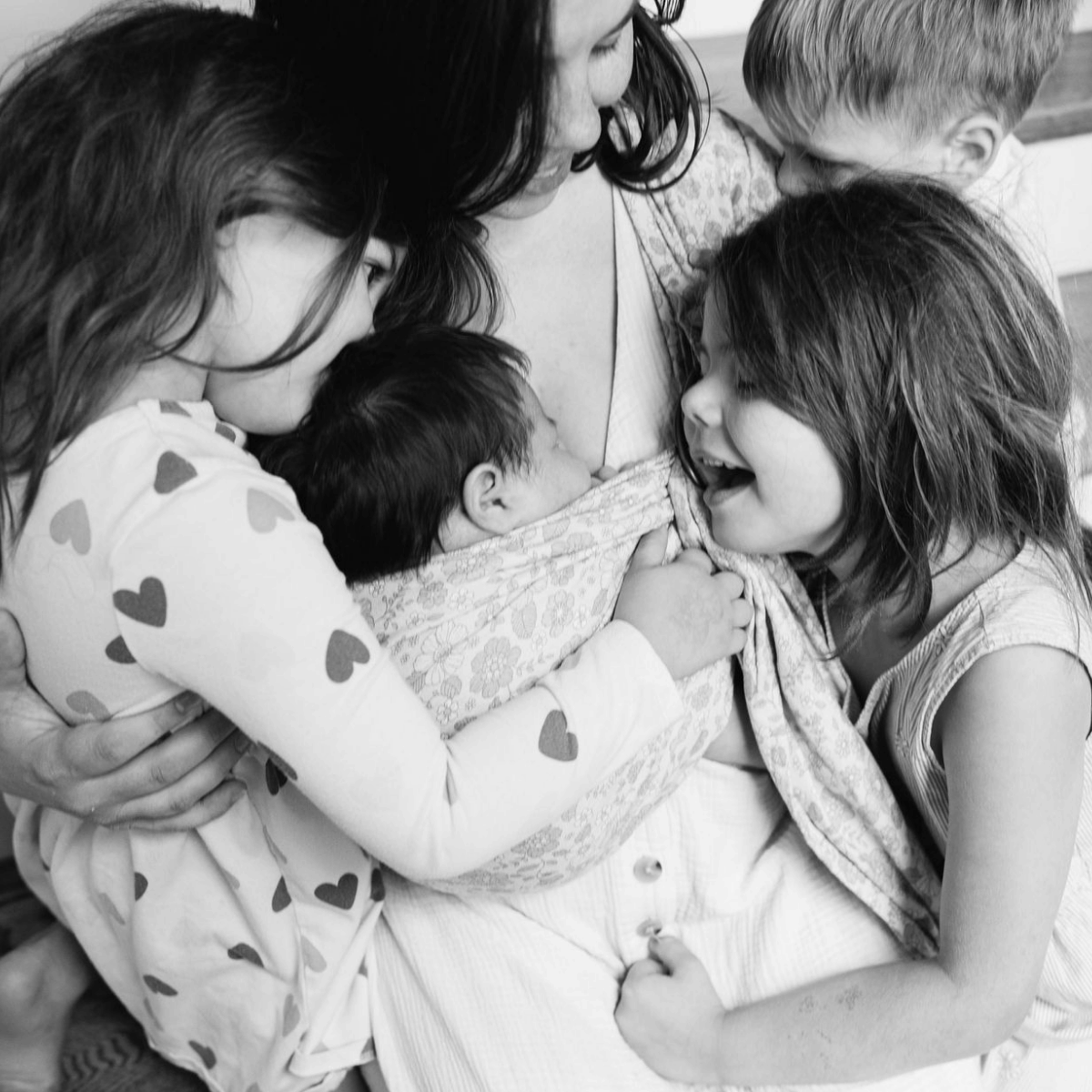
Now I could keep my baby close to me, and both of us felt calmer and more secure. I was able to do simple tasks again- prep meals, eat those meals (warm! with both hands!) and feel less like I was being pulled apart in the worst game of tug of war. Read on to learn about the evidence based benefits of babywearing offered to parents.
THE SHORT VERSION
In technical terms, babywearing is an age-old practice of holding an infant against a caregiver’s torso with a supportive device.
Babywearing promotes a secure attachment and bond between baby and caregiver.
Physical and developmental benefits include developing core strength and early social skills.
Babywearing has been shown to promote breastfeeding.
Caregivers who babywear can multitask, and may feel less stress and reduce mood-associated postpartum concerns.
More research is needed to scientifically prove all the benefits of babywearing, but if you know you know that it’s a priceless parenting practice.
Table of Contents
What is Babywearing?
Babywearing is the age-old practice of holding an infant against a caregiver’s torso with a supportive device, such as a ring sling, soft structured carrier, fabric wrap, or other accessory. Often rooted deeply in cultural practices, babywearing also has a multitude of benefits such as bonding and attachment, developmental advantages, less parental stress and anxiety, and practical uses such as improved efficiency and hands-free movement.

Effects on Attachment and Bonding
One of the most widely recognized benefits of wearing an infant or child is the promotion of bonding and attachment. Attachment can be approached in many ways, but the most widely understood theory divides attachment into four main categories (Benoit, 2004):
Secure
The Goalthe goal attachment style, in which parents are responsive to the needs of their offspring, and subsequently children feel equipped to experience negative emotion and explore the world, knowing they have a safe place to return to, if needed.
Avoidant
these children learn through experiences that their needs may be met in rejecting or insensitive ways, and so avoid or minimize their negative emotions when around caregivers
Anxious
the hallmark of this style is unpredictability- at times caregivers will respond with warmth, but at other times they may be unavailable to help the child cope with the negative emotion he or she is experiencing.
Disorganized
often occurs when a child learns with repetition that their needs, when expressed, go unmet.
The proximity of babywearing helps promote a secure attachment in part due to the fact that it is easier to notice your child’s cues earlier when they are on your body (rather than across the room). Physical contact with our infants is known to release a hormone called oxytocin, which is a huge player in social bonding. Carrying infants close in baby wraps, slings, or structured carriers promotes release of that hormone and subsequently can help caregivers feel more connected to their children.
Other, similar interventions – such as Kangaroo care and skin-to-skin – have been better researched than babywearing alone, and have demonstrated important improvements in regulation of body temperature, heart rates, and breathing patterns, even if these sorts of care are only provided for a few minutes each day (Skin-to-Skin Contact: How Kangaroo Care Benefits Your Baby, 2024).

Physical & Developmental Benefits for Baby
Beyond the bond, wearing your infant has numerous other developmental and physical benefits. Early on, babywearing can help support a child to develop important core muscles, similar to tummy time. This can be especially true as it is incredibly motivating for a baby to look to a caregiver for interaction, encouraging them to lift their head and neck upwards towards their parent. By increasing core strength and time spent in upright positions (rather than flat on their back, where infants spend much of their time prior to learning to roll), babies that are frequently worn may also experience less positional head flattening (also called plagiocephaly).
It’s also important to work towards an ergonomic fit in whatever carrier you choose that safely supports hip-healthy development. Some baby gear and/or positions can actually place the child’s hips in a position that is not conducive to proper hip development, but if worn correctly, baby’s hips and spine are supported to gain strength and grow optimally through use of baby carriers or wraps. In some societies where babywearing is a routine practice, evidence suggests they may even have lower rates of hip dysplasia, or abnormal development of the way the leg sits in the hip socket. The ideal position for a child’s lower body during wearing should resemble an “M”- we want thighs fully supported knee to knee, and the knees should naturally rest just slightly higher than their bottom.
Additionally, the proximity to a caregiver’s face exposes them to more facial expressions, nonverbal cues, and language than a baby who is placed in an infant floor lounger or other container. Parents are also more likely to bounce and sway, which increases input into the motor and balance sections of the infant brain. These effects could also extend to older children, especially those with neurodevelopmental differences such as autism, but more research is necessary prior to drawing any conclusions.

Advantages for Breastfeeding
For caregivers choosing to feed their babies breastmilk, babywearing has some unique benefits. Remember oxytocin, a hormone increased by physical proximity to our infants? It’s also a huge player in lactation and breastfeeding (Reynolds-Miller, 2016), especially when it comes to milk ejection and let down. Additionally, since the carried infant is always being “near the kitchen,” so to speak, a chestfeeding dyad can quickly access milk when needed. Breastfeeding caregivers often can even feed while babywearing, with some important modifications for safety. This can be huge for families, especially if they have multiple children that need tending.
Not directly nursing? No problem! Offering a bottle of expressed breast milk or formula while wearing your child can still promote attachment in all the ways we’ve discussed already while also maintaining that convenience factor for caregivers.

Babywearing Benefits for Caregivers
Babywearing is not just good for the baby; it’s good for parents and caregivers as well. We’ve mentioned some of the benefits when we talked about attachment, but babywearing also improves quality of life for parents by giving them the ability to multitask. That can look like wearing a baby while prepping dinner, doing a little self-care, or corralling other children. Many caregivers also report a decrease in stress, which may be related to the ease of soothing a child when they’re already held close, the studied reduction in crying time among infants that are routinely carried, or the ability to accomplish other tasks while still remaining attentive to the child. Anecdotal evidence also suggests there may be reduction in postpartum mood concerns like anxiety and/or depression, though more rigorous research is needed in those areas to establish true causality. In other words, babywearing needs to be studied more scientifically to truly show that it causes a meaningful reduction in PPA/PPD.
And of course, who doesn’t love a cute accessory?

Benefits of Babywearing Across the Years
As your child ages, the primary benefits of babywearing may shift. The infant period is often focused on attachment foundations, responsiveness to needs, and convenience. As children age into toddlers the benefits of babywearing are more aimed towards expanding that secure attachment and safety.
One common misconception about babywearing often comes across in the form of the statement: “Your child needs to be walking or they’ll never be independent.”
However, given what we discussed earlier from attachment theory, I am inclined to think that it is far more likely that babywearing promotes independence by establishing a secure position from which your child can go on and explore the world, orbiting back to caregivers when they need to re-establish their safety and be reassured.
Parents also benefit from wearing toddlers or older children in situations that may be otherwise challenging or unsafe, such as large crowds or areas where a stroller may not pass easily. As one example, one of my absolute non-negotiables when it comes to packing a carry-on bag for a flight anywhere, is enough space to slip a ring sling to help my child and me maneuver through the tight aisles of the airplane. This has saved us so many tears and made a huge difference in transitions, sleep, and comfort on countless long flights and layovers.

What the Research Doesn’t Say
While babywearing does have all these incredible benefits, think of it as an additional tool in the toolbox, not a requirement. Not every baby will love every carrier. Also, caregivers should still offer floor play, independent exploration, and tummy time in addition to wearing your child.
If, for whatever reason, a caregiver is advised not to carry their child, be it for their personal health, the health of the child, or any other consideration, that does not mean that the child will be deprived or any less well-bonded, despite what we have just covered about all the benefits of babywearing.
Every caregiver-child relationship is unique. No one activity or moment undermines the love in all of the rest of them.

Wrapping It All Up
When I consider the benefits of babywearing as a pediatrician and mother of 3, it seems to me that we’ve experienced a little bit of each of the benefits listed above. Personally, I felt that cradling my child close helped with my adjustment into motherhood, and the experience of continuing to carry my child after birth became an integral part of how I parent. This secret superpower has also changed how I practice medicine. I recommend babywearing for the physical benefits such as hip support for at-risk babies or to prevent flat heads in babies who despise tummy time. I also recommend babywearing to parents who are having a harder adjustment, for whatever reason. I’ve even been known to tell an anxious caregiver to bring in their ring sling to their next visit. I help them get a good, supportive fit so they feel a little more empowered when they leave.
Babywearing will always remain one of my most cherished memories and activities. I look forward to many more years of carrying before we hang up our slings for the last time – hopefully, in the very distant future. Happy wearing!

Evidence Based Benefits of Babywearing FAQ
What are the top benefits of babywearing backed by research?
Babywearing supports secure attachment, can reduce crying, and promotes successful breastfeeding.
How does babywearing support secure attachment?
When babies are worn, caregivers can more easily read and understand their cues and needs. When caregivers tend to their babies needs quickly and reliably, babies develop a more secure attachment.
How does babywearing reduce crying?
When babies are worn, their caregivers can more quickly tend to their needs. Crying is a later stage cue that a baby needs something, so when babies are held in baby carriers, their caregivers can help them before they get to the crying stage.
How does babywearing help a baby’s physical development?
Babywearing helps babies work on their core strength. Positioning in a carrier is similar to positioning during tummy time with the added bonus of being closer to their caregiver and wanting to look up at the loving faces looking down on them.
How does babywearing help with breastfeeding?
When the lactating caregiver babywears, the closeness they experience with their baby promotes the release of oxytocin which aids in milk production and letdown. It also allows babies easier access to the breast. These benefits apply to chestfeeding families or families who pump and give breastmilk in bottles.
How do caregivers benefit from babywearing?
Babywearing helps caregivers multitask, tend to older children, bond with their baby, and reduce stress. More research is needed in this area, but it’s possible babywearing even reduces postpartum mood concerns like PPD or PPA.
Are there any downsides to babywearing?
Not really. As long as you’re using your carriers correctly and listening to your body, there are no downsides to babywearing. Despite that you may hear, worn babies and toddlers are just as likely to walk and develop their independence.
What if I can’t babywear?
Some caregivers may be advised against babywearing by their medical care team. No one activity determines the entire trajectory of your baby’s development. It’s about all the moments and experiences put together. Note: If you’re avoiding babywearing because you’re uncomfortable (but medically cleared to carry) or your baby hates carriers, it’s worth getting a fit check to make sure you’re getting an optimal fit!
References
Anisfeld, E., Casper, V., Nozyce, M., & Cunningham, N. (1990). Does infant carrying promote attachment? An experimental study of the effects of increased physical contact on the development of attachment. Child Development, 61(5), 1617. https://doi.org/10.2307/1130769
Benoit, D. (2004). Infant-parent attachment: Definition, types, antecedents, measurement and outcome. Paediatrics & Child Health, 9(8), 541–545. https://doi.org/10.1093/pch/9.8.541
Hunziker, U. A., & Barr, R. G. (1986). Increased carrying reduces infant crying: A randomized controlled trial. Pediatrics, 77(5), 641–648. https://doi.org/10.1542/peds.77.5.641
Reynolds-Miller, R. L. (2016). Potential therapeutic benefits of babywearing. Creative Nursing, 22(1), 17–23. https://doi.org/10.1891/1078-4535.22.1.17
Skin-to-skin contact: How kangaroo care benefits your baby. (2024, February 2). HealthyChildren.Org. https://www.healthychildren.org/English/ages-stages/baby/preemie/Pages/About-Skin-to-Skin-Care.aspx?_gl=1
Meet the Author

Brittany Mitchell, MD
Brittany Mitchell, MD is a board-certified pediatrician and mom who creates clear, science-backed content online (@Dr.BrittanyMitchell) to help parents feel confident caring for their kids. Through relatable “real life mom” moments and evidence-based education, she translates complex pediatric health topics into practical, reassuring guidance families can actually use. Her content focuses on newborn care, child development, preventive health, and everyday parenting decisions—always grounded in science and compassion.

Leave a comment
This site is protected by hCaptcha and the hCaptcha Privacy Policy and Terms of Service apply.